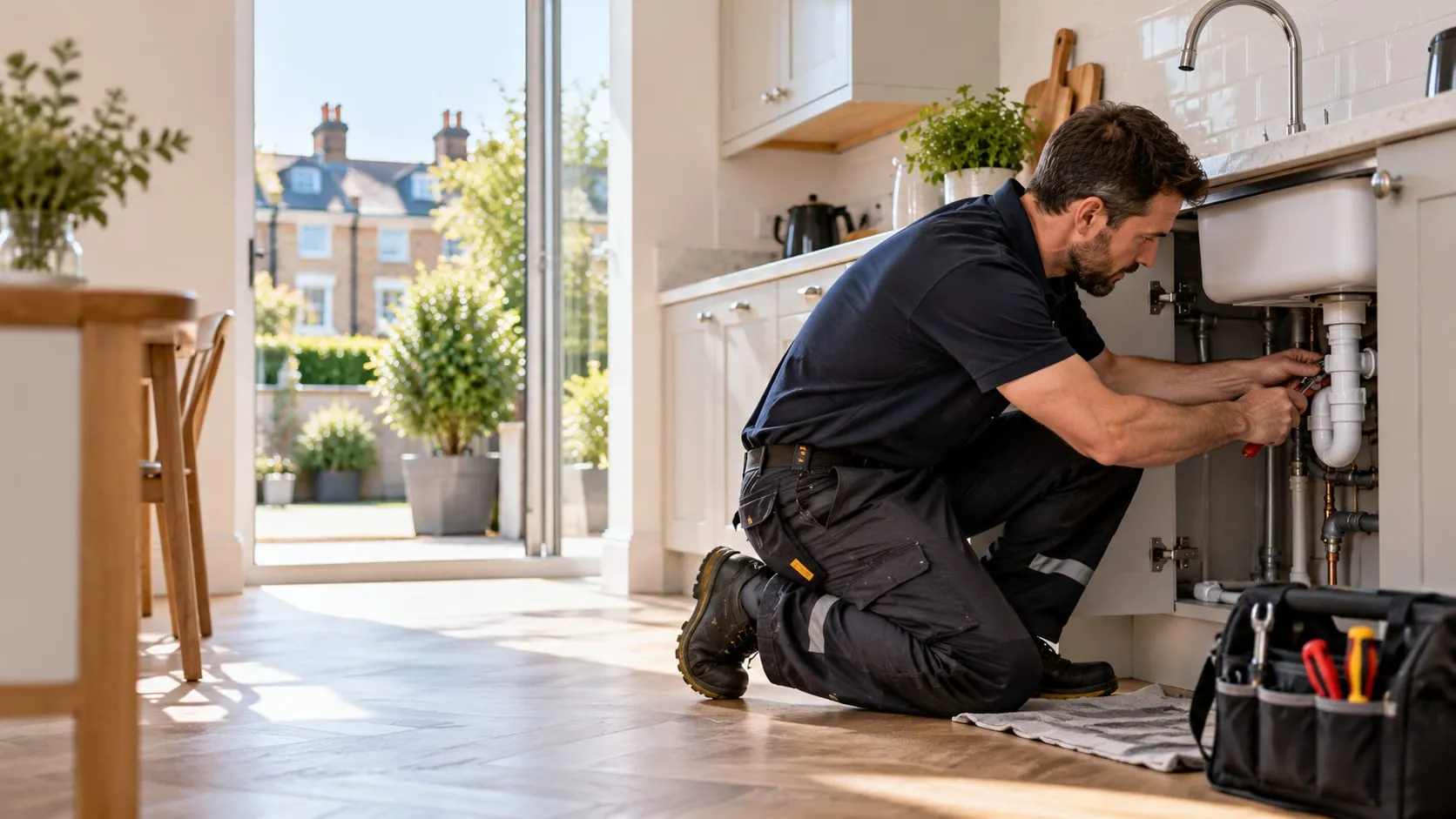
Cover for urgent call-outs
Landlord Home Emergency Cover
A call-out and an emergency repair when the heating fails, a pipe bursts or the tenant is locked out, usually available around the clock.
- Heating, plumbing, electrics, drainage and security
- Approved contractor sent out, usually within hours
- Compare quotes from 40+ providers
Partnered with Quotezone
What being partnered with Quotezone means LandlordQuote is a trading style of Simply Quote Comparison Ltd. We are partnered with Quotezone, a trading style of Seopa Ltd (FCA FRN: 313860). As an Introducer Appointed Representative of Seopa Ltd, we may be paid a commission if you request a quote through this website. We do not provide advice or make recommendations. Your choice of provider is entirely your own.Compare landlord insurance and deals from industry leading providers, including





















01
What Is Landlord Home Emergency Cover?
Landlord home emergency cover sends an approved engineer and pays for an emergency repair, up to a set limit, when something at the property fails urgently.
It is a service rather than a settlement. The aim is to make the property safe, secure and habitable again quickly, not to fund a full replacement.
It is an add-on rather than a core section, and the per-claim limit varies enough across landlord insurance available in the UK to be worth reading before you rely on it.
02
How Do You Compare Landlord Home Emergency Cover Quotes?
Compare what systems are included, the limit per call-out and whether your tenant can call directly.
- 1
Check which systems are covered
Heating, plumbing, electrics, drainage, security and roofing appear in different combinations. Pest control and lost keys are often optional.
- 2
Look at the limit per emergency
Limits are modest by design. Check both the per-call-out limit and any cap on the number of call-outs a year.
- 3
Confirm the tenant can call
The value of this product is speed. If every call has to route through you, much of the benefit is lost.
- 4
Read the age and service conditions
Many policies exclude boilers over a certain age, or any appliance without a service record. This is where cover most often turns out to be narrower than expected.
03
What Does Landlord Home Emergency Cover Include?
Most policies cover heating and hot water failure, plumbing leaks, electrical faults, blocked drains, and damage that leaves the property insecure.
Heating and hot water
The most common call-out, and the most urgent in winter. Cover typically pays for an engineer to attend, diagnose and repair a failed boiler or heating system.
Plumbing and water leaks
Burst pipes, leaking joints and tank failures. The policy usually pays to stop the leak and make good the immediate problem, while the resulting water damage falls to your buildings cover.
Electrical failures
A total loss of power, or a fault that makes the installation unsafe. Faults inside a tenant’s own appliance are not usually included.
Security and access
A broken external door or window that leaves the property insecure, and in many policies a lockout. Boarding up and temporary repairs are typical.
Drainage
Blockages up to the property boundary. Beyond that it is usually the water company’s responsibility rather than yours.
Compare in one place
See what emergency cover is available for your property.
One set of questions, quotes back from UK providers.
04
What Is Not Covered by Home Emergency Cover?
Routine maintenance, old or unserviced appliances, full replacements, cosmetic making good and anything that is not genuinely urgent fall outside it.
-
Routine servicing and inspections
The annual gas safety check and periodic electrical testing are legal duties and planned costs. GOV.UK sets out a landlord’s safety responsibilities, and none of them is an emergency.
-
Old or unserviced systems
Boilers above a certain age, or with no service history, are commonly excluded. Keeping a service record is what keeps the cover usable.
-
Full replacement
If the boiler cannot be repaired, most policies stop at the diagnosis. Replacement is your cost unless you hold a separate breakdown or replacement product.
-
Making good afterwards
Lifting a floor to reach a pipe is covered; relaying the floor covering often is not. Check how far reinstatement goes.
-
Problems that are not urgent
A dripping tap or a single failed radiator will usually be declined as routine maintenance. The test is whether the property is unsafe, insecure or uninhabitable.
05
How Does It Fit With Your Repairing Duties?
Home emergency cover helps you meet your repair obligations quickly, but it does not transfer them. The legal duty stays with you.
The duty itself
Section 11 of the Landlord and Tenant Act 1985 puts the structure, exterior and the installations for water, gas, electricity, sanitation and heating on the landlord. A tenancy agreement cannot contract out of it.
Why speed matters legally
Repairs must be carried out within a reasonable time, and what counts as reasonable narrows sharply when a property is cold or unsafe. A tenant left without heating in winter has a strong disrepair complaint.
Gas work must be done properly
Any work on gas appliances must be carried out by a Gas Safe registered engineer, and HSE explains a landlord’s gas duties. Emergency providers use registered engineers, which is one of the practical reasons landlords use them.
It supports evidence too
A call-out log showing when a fault was reported and when it was attended is useful evidence if a disrepair claim follows. Keep the records.
06
What Limits and Conditions Should You Check?
Per-call-out limits, annual caps, appliance age rules and the initial exclusion period decide how much of the cover you can actually use.
The limit per emergency
Limits are set deliberately low, because this is a call-out product rather than a repair fund. Anything above the limit is authorised and paid by you at the time.
The annual cap
Many policies cap the number of call-outs a year, or the total spend across them. A property with an ageing heating system can reach that cap in a single winter.
Age and service conditions
Boilers over a stated age are commonly excluded, and some insurers require evidence of annual servicing before they will attend. Keeping the service record is what keeps the cover usable.
The initial exclusion period
Cover typically does not start for a short period after purchase, often around 14 days. That stops the policy being bought once something has already failed.
What counts as making good
Lifting a floor to reach a leak is part of the repair, while relaying the floor covering afterwards often is not. Check how far reinstatement extends before you need it.
07
How Does a Home Emergency Call-Out Work?
The tenant or you call a 24-hour line, the provider sends an approved contractor, and the cost of attendance and the emergency repair is met up to the limit.
A worked example
A boiler fails on a Saturday in January with a limit of £500 per emergency.
An engineer attends the same day, diagnoses a failed pump and replaces it for £340 including labour. The policy meets the £340. Had the boiler been unrepairable, the policy would have covered the attendance and diagnosis, leaving the replacement to you.
Nominate the tenant as a contact
Registering the tenant with the provider means they can call directly at two in the morning. That single step is what turns this from a product into a service.
Know what falls outside
If the work exceeds the limit, you are asked to authorise the balance. Knowing the limit before the call avoids an awkward decision at the time.
08
How Much Does Landlord Home Emergency Cover Cost?
It is typically a modest annual addition to a landlord policy, priced on the property type, the systems covered and the limit per call-out.
What moves the price
- 1 Limit per emergency Higher limits cost more
- 2 Systems included Adding drainage, roofing or pest control raises it
- 3 Property type HMOs and larger properties cost more
- 4 Number of properties Portfolio cover reduces the per-property cost
- 5 Boiler age Older systems may be excluded or loaded
- 6 Call-out allowance More call-outs a year raises it
When it earns its money
A single weekend boiler call-out at trade emergency rates can approach the annual premium. The calculation is different if you have a plumber who answers the phone.
09
Is Home Emergency Cover Worth It for Landlords?
It suits landlords who manage at a distance, run several properties, or have no reliable tradesperson. It adds less for those who manage locally with a trusted contractor.
When it makes sense
Letting a property a long way from where you live, or holding several properties where something is always failing. The 24-hour line and approved contractors do the work you would otherwise do yourself.
When it adds less
If you have a plumber and an electrician who will attend the same day, you may be paying for access you already have. The limits are modest, so the saving on any one job is capped.
The tenant experience argument
Fast response keeps tenants, and a tenant who stays another year is worth far more than the premium. That is often the stronger case for this cover.
Check your managing agent first
Many agents already include an emergency line in their management fee. Buying it twice is a common and avoidable cost.
Questions
Frequently asked questions
What is landlord home emergency cover?
It is a call-out service rather than an insurance settlement. When something fails urgently, the provider sends an approved engineer and pays up to a set limit for the call-out, labour and parts needed to make the property safe.
How is it different from a boiler service plan?
A service plan covers annual servicing and breakdown of the boiler specifically. Home emergency is broader but shallower, covering several systems up to a modest limit and aimed at making things safe rather than replacing them.
Will it replace an old boiler?
Usually not. Cover is for emergency repair, and most policies exclude replacement, particularly where the boiler is beyond a certain age or has not been serviced.
What counts as an emergency?
Typically a failure that makes the property unsafe, insecure or uninhabitable: no heating in winter, a burst pipe, a total loss of power, a blocked sole toilet or a door that will not lock.
Does my tenant call it out directly?
Most providers let you nominate the tenant as a contact so they can call without going through you. That is the main practical benefit for landlords who do not live nearby.
Is there a claim limit?
Yes. Policies set a limit per emergency and often a maximum number of call-outs per year. Work beyond the limit is charged to you.
Does it cover the annual gas safety check?
No. The annual gas safety check is a legal duty and a routine cost, not an emergency. Some providers bundle it into a separate package.
Is there a waiting period?
Most policies have an initial exclusion period, commonly around 14 days, so you cannot buy cover once something has already failed.
Does it cover blocked drains?
Drainage is usually included up to the boundary of the property. Shared drains beyond that are normally the water company’s responsibility.
Is it worth having on one property?
It depends on whether you have a trusted local tradesperson and how far away you live. Landlords managing at a distance get the most from it, and those with a reliable plumber nearby often do not.
Does it cost anything to compare quotes here?
No. Comparing is free and there is no obligation to buy. We may be paid a fee when a policy is taken out, which does not change the price you are quoted.
Ready to compare quotes?
A call-out and an emergency repair when the heating fails, a pipe bursts or the tenant is locked out, usually available around the clock.
Compare landlord insurance quotes from UK providers.