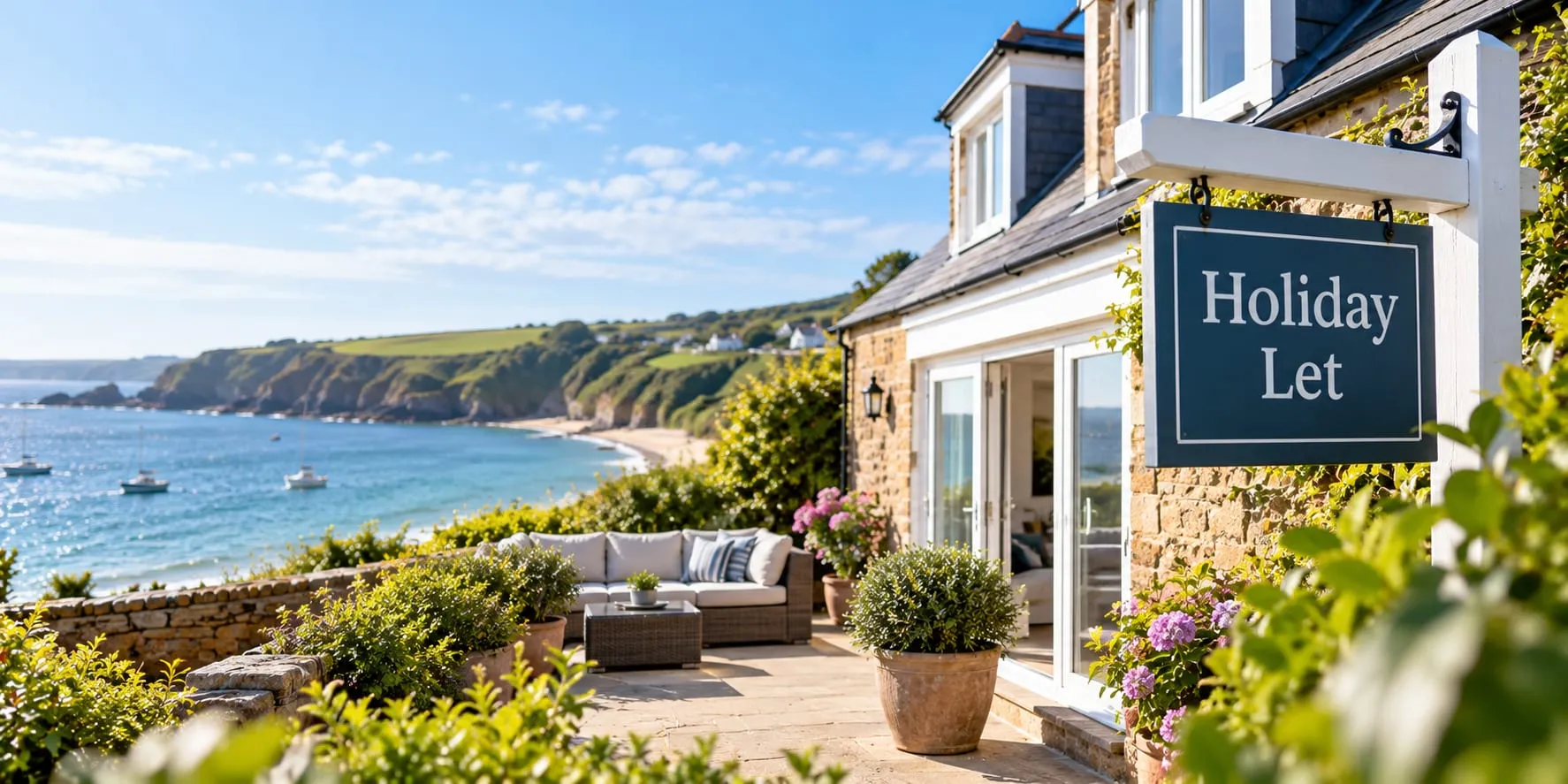
Cover for short-term and serviced lets
Holiday Let Insurance
Cover written for a property let to paying guests on short stays, where a standard home or buy-to-let policy would not respond.
- Cottages, coastal lets, city apartments and Airbnb hosting
- Public liability and loss of bookings cover available
- Compare quotes from 40+ providers
Partnered with Quotezone
What being partnered with Quotezone means LandlordQuote is a trading style of Simply Quote Comparison Ltd. We are partnered with Quotezone, a trading style of Seopa Ltd (FCA FRN: 313860). As an Introducer Appointed Representative of Seopa Ltd, we may be paid a commission if you request a quote through this website. We do not provide advice or make recommendations. Your choice of provider is entirely your own.Compare landlord insurance and deals from industry leading providers, including





















01
What Is Holiday Let Insurance?
Holiday let insurance covers a property you let to paying guests on short stays, combining buildings and contents cover with the public liability that comes from having guests on site.
A standard home policy excludes commercial letting, and a buy-to-let policy assumes a tenancy lasting months rather than nights. Holiday let cover sits between the two.
That makes it one of the more specialist forms of insurance for UK landlords, and the wording varies more between insurers than the price does.
02
How Do You Compare Holiday Let Insurance Quotes?
Describe the property, how often it is let and how it is booked, then compare public liability limits and loss of bookings cover rather than premium alone.
- 1
Describe the property and its location
Construction, age and postcode all matter, and coastal or rural locations bring their own considerations. Thatch, listed status and private water supplies should all be declared.
- 2
Say how it is let
Insurers want the number of weeks let each year, the maximum occupancy and whether you use a platform or an agency. Be accurate about whether you also use it yourself.
- 3
Choose the liability limit
Paying guests raise the liability exposure well above a residential let. Agencies and platforms often set a minimum limit, so check before you choose.
- 4
Decide on loss of bookings
Work out what a full season is worth to you and whether you could absorb losing part of it. Then compare the indemnity periods on offer.
03
What Does Holiday Let Insurance Cover?
A typical policy covers the building, the contents and furnishings you provide, your public liability to guests, and the bookings you lose after an insured event.
Buildings
The structure, roof and permanent fixtures, insured for the rebuild cost. Period cottages and listed properties need a rebuild figure based on matching materials, which is well above a modern equivalent.
Contents and furnishings
Holiday lets are furnished to a higher standard than most tenancies, and the contents figure should reflect that. Beds, sofas, kitchen equipment, televisions and outdoor furniture all count. Turnover is high, so accidental damage cover earns its place here more than on a residential let.
Public liability
This responds if a guest is injured at the property and claims you were responsible. Hot tubs, swimming pools, steep stairs and open fires all raise the exposure, and some insurers ask about them specifically.
Employers' liability
If you employ a cleaner, a changeover team or a gardener, employers' liability is a legal requirement in most cases. Holiday let policies often include it or offer it as an extension.
Compare in one place
See what cover is available for your holiday let.
One set of questions, quotes back from UK providers.
04
What Is Loss of Bookings Cover?
Loss of bookings replaces the income from confirmed bookings you have to cancel because an insured event has made the property unusable.
How it is calculated
The insurer looks at what the cancelled bookings would have earned, usually within an indemnity period you set at quote. Twelve months is common, and longer periods suit properties that would be slow to rebuild.
What it does not do
It does not cover a quiet season, a fall in demand or a platform delisting you. The trigger has to be physical damage covered by the policy.
Seasonality matters
Losing August is not the same as losing February. If your income is concentrated in a short season, check whether the settlement reflects actual booking values or an averaged figure.
05
What Is Not Covered by Holiday Let Insurance?
Wear and tear from heavy turnover, undeclared long vacancies, theft without forced entry and undisclosed features such as hot tubs are common exclusions.
-
Wear and tear
A holiday let takes more punishment than a family home. Worn carpets and tired furniture are a replacement budget, not a claim.
-
Long periods standing empty
Holiday let policies expect quiet seasons, but there is still a limit. A property closed for a full winter may need to be declared, and unoccupied cover may be more appropriate.
-
Theft without forcible entry
Guests hold keys, so theft is treated differently from a break-in. Many policies only pay where there is evidence of forced entry, which leaves items taken by a guest outside cover.
-
Features you did not declare
Hot tubs, pools, log burners and games rooms all change the risk. Adding one mid-policy without telling the insurer can undermine a later claim.
06
How Does a Holiday Let Claim Work?
You report the damage, the insurer assesses it, and settlement covers reinstatement plus the value of bookings you had to cancel while the property was unusable.
A worked example
A leak from a bathroom damages the ceiling and flooring below in March, and the repair is quoted at £9,000 against a £500 excess.
You cancel six weeks of confirmed bookings worth £7,200. The insurer settles the repair at £8,500 after the excess. If loss of bookings is in force and the cause is covered, the cancelled bookings are paid on the evidence of your booking records.
Keep booking records that prove income
Platform statements, your booking calendar and last year’s accounts are what the insurer works from. A property with no documented booking history is much harder to settle.
Report before you cancel guests
Tell the insurer as soon as you know the property is unusable, ideally before you cancel bookings. They may accept a shorter closure or approve temporary repairs.
07
How Much Does Holiday Let Insurance Cost?
Price is driven by the rebuild cost, the location, how many weeks the property is let and what features it has, so a single average figure would be misleading.
What moves the price
- 1 Rebuild cost Higher figure, higher premium
- 2 Construction and roof type Thatch and non-standard construction raise it sharply
- 3 Location Coastal, flood risk and remote properties cost more
- 4 Weeks let per year More letting weeks, higher premium
- 5 Maximum occupancy Larger groups raise the liability rating
- 6 Hot tubs, pools and log burners Each adds to the liability and damage exposure
- 7 Loss of bookings limit A longer indemnity period raises it
Why holiday let costs more than buy-to-let
Higher turnover, paying guests and valuable contents all push the price above an equivalent residential let. The liability element alone accounts for much of the difference.
09
Which Short-Term Lets Need This Cover?
Cottages, coastal and lakeside lets, city apartments, annexes and rooms let through booking platforms all fall outside standard home and buy-to-let policies.
Traditional holiday cottages
The classic case, often period property in a rural or coastal location. Rebuild cost and construction type drive the premium more than the booking pattern does.
City apartments and short stays
Leasehold flats bring the freeholder’s buildings policy into play, so you may only need contents and liability. Check the lease, because many prohibit short-term letting outright.
Airbnb and platform hosting
Hosting through a platform is still commercial letting, whether it is a whole property or a spare room. Platform protection schemes are limited, so hold your own cover.
Annexes and rooms in your own home
Letting part of the home you live in needs the main policy extended or replaced. Insurers treat a self-contained annexe differently from a room inside the house.
Questions
Frequently asked questions
What is holiday let insurance?
It is property insurance written for a home let to paying guests on short stays. It combines buildings and contents cover with public liability, and usually adds cover for loss of bookings and for guest damage.
Can I use normal home insurance for a holiday let?
No. A standard home policy is priced for owner occupation and excludes commercial letting. Taking bookings on a home policy risks a declined claim and a voided policy.
Does my buy-to-let policy cover short stays?
Usually not. Buy-to-let cover assumes an assured periodic tenancy with one household in place for months. Short stays bring higher turnover and public liability exposure, which insurers rate separately.
Do I need public liability cover?
It is not a statutory requirement, but paying guests make it close to unavoidable in practice. Booking platforms and letting agencies frequently require a minimum limit before they will list a property.
Does Airbnb host protection replace insurance?
No. Platform schemes are limited in what they cover and are not a substitute for a policy. Hold your own cover and treat any platform protection as an extra layer.
What is loss of bookings cover?
It replaces the income you lose when an insured event makes the property unusable and you have to cancel confirmed bookings. It does not cover a quiet season or general lack of demand.
Am I covered when the property is empty out of season?
Holiday let policies expect empty periods, which is a key difference from a residential policy. There is still usually a limit on how long it can stand unoccupied, and winter conditions such as draining down the system may apply.
Does it cover damage caused by guests?
Accidental damage by guests is commonly covered or available as an option. Theft by guests is treated differently and often needs forcible entry, so check the wording.
What counts as a furnished holiday letting for tax?
HMRC sets availability and letting thresholds that a property must meet to qualify. The tax treatment is separate from the insurance, but insurers often ask how the property is let.
Do I need a fire risk assessment?
Holiday lets are treated as business premises for fire safety, so a fire risk assessment is normally required. Insurers will expect working alarms and a clear escape route.
Does it cost anything to compare quotes here?
No. Comparing is free and there is no obligation to buy. We may be paid a fee when a policy is taken out, which does not change the price you are quoted.
Ready to compare quotes?
Cover written for a property let to paying guests on short stays, where a standard home or buy-to-let policy would not respond.
Compare landlord insurance quotes from UK providers.