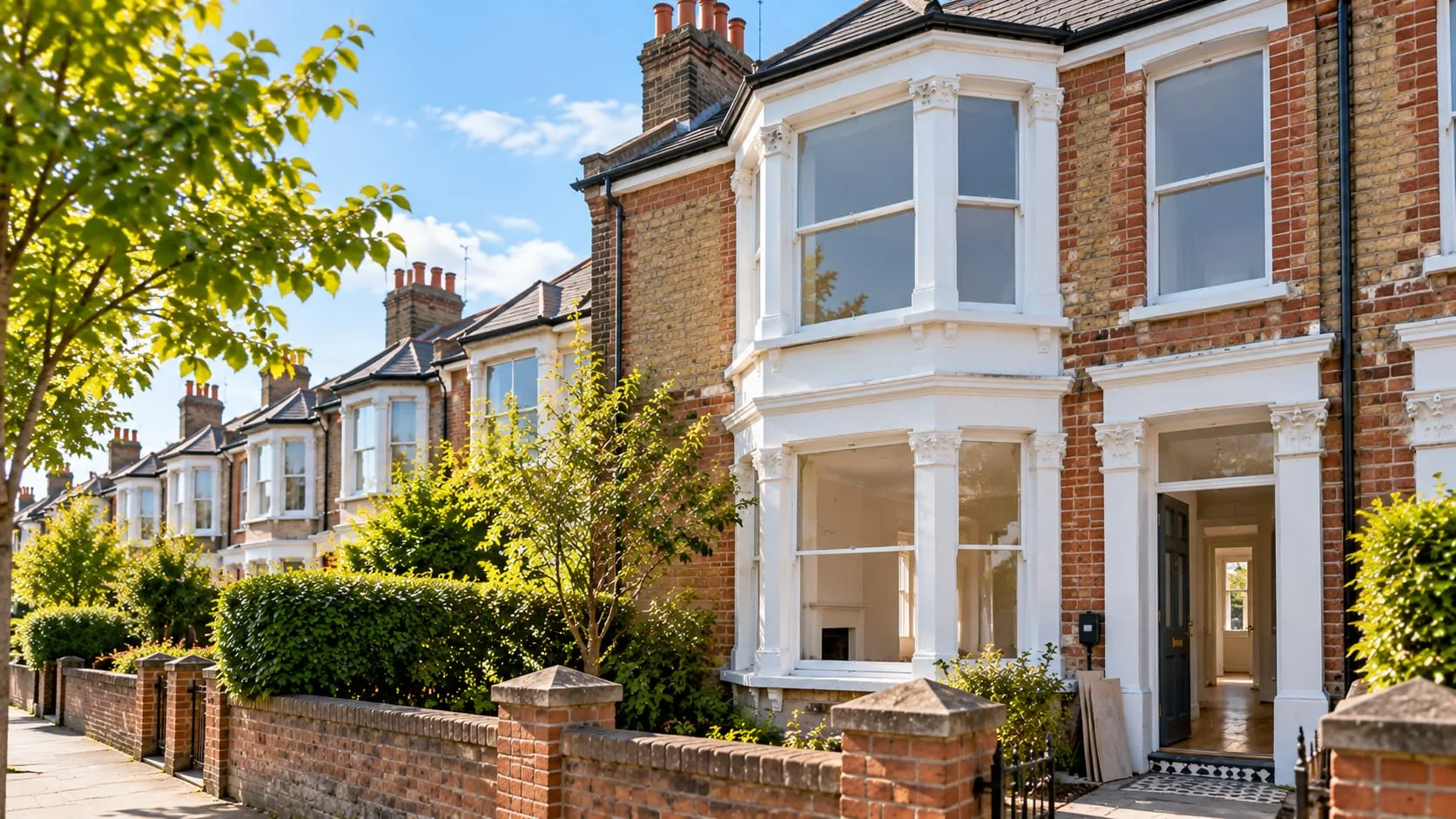
Cover for a property standing empty
Unoccupied Property Insurance
Cover for a property nobody is living in, whether it is between tenancies, going through probate, or being refurbished.
- Void periods, probate, renovation and properties awaiting sale
- Short-term policies from a few months upward
- Compare quotes from 40+ providers
Partnered with Quotezone
What being partnered with Quotezone means LandlordQuote is a trading style of Simply Quote Comparison Ltd. We are partnered with Quotezone, a trading style of Seopa Ltd (FCA FRN: 313860). As an Introducer Appointed Representative of Seopa Ltd, we may be paid a commission if you request a quote through this website. We do not provide advice or make recommendations. Your choice of provider is entirely your own.Compare landlord insurance and deals from industry leading providers, including





















01
What Is Unoccupied Property Insurance?
Unoccupied property insurance covers a building that nobody is living in, at a point when a standard landlord or home policy would restrict or withdraw cover.
An empty property is a higher risk than an occupied one. Nobody notices a leak, a break-in or a failed boiler, so small problems become large claims.
It is normally bought as a short standalone policy rather than as part of ordinary UK landlord insurance cover, and it ends once someone moves back in.
02
How Do You Compare Unoccupied Property Insurance Quotes?
Say why the property is empty and for how long, then compare which perils are actually included rather than comparing premiums.
- 1
Explain why it is unoccupied
Between tenancies, probate, renovation, awaiting sale and repossession are all rated differently. Insurers treat a property in probate very differently from one being gutted by contractors.
- 2
Give a realistic timescale
Choose a policy length you can live with, commonly three, six or twelve months. Under-estimating means arranging cover again mid-project.
- 3
Declare any building work
Say what work is planned, who is doing it and roughly what it is worth. Structural work and contractors on site change both the price and the available cover.
- 4
Compare the perils, not the price
Two unoccupied policies at similar prices can cover very different things. Check escape of water, theft and malicious damage specifically, because these are the ones commonly cut.
03
What Does Unoccupied Property Insurance Cover?
Cover is narrower than a standard policy: fire and the major perils are included, while water damage, theft and vandalism are often restricted.
The core perils
Fire, lightning, explosion and aircraft form the minimum on almost every unoccupied policy. This level is sometimes sold as FLEA cover and is the cheapest option available.
Wider cover you can usually add
Storm, flood, subsidence and impact are commonly available as a step up. Escape of water is the one to look at hardest, because it is the most likely claim in an empty house.
Property owners liability
An empty property still carries liability. A falling slate, an insecure boundary or an injured contractor can all produce a claim against you as owner.
Contents and fixtures
Contents cover is usually limited or excluded, because an empty property is a target for theft. Where it is offered, expect a low single-item limit and a requirement for forced entry.
Compare in one place
See what cover is available for your empty property.
One set of questions, quotes back from UK providers.
04
When Does a Property Become Unoccupied?
Policies define it by consecutive days rather than by your intentions, and the threshold is written into your wording rather than set by law.
The usual thresholds
Most standard landlord and home policies restrict cover once a property has stood empty for a set number of consecutive days, commonly somewhere between 30 and 60. After that point, cover typically narrows to a limited set of perils. The exact figure varies by insurer, so read your schedule rather than assuming a number.
Why a short void is usually fine
A fortnight between tenancies while you clean and re-let does not normally trigger anything. The clock is about sustained emptiness, not the gap between one tenant leaving and the next arriving.
Furnished but empty still counts
Leaving furniture in place does not make a property occupied. Some insurers also treat a property as unoccupied where someone stays only occasionally.
05
Why Do People Need This Cover?
Void periods, probate, renovation, properties on the market and homes awaiting a care move are the situations that come up most often.
Between tenancies
A void that runs on for months, often while the property is being refurbished for a new tenant. This is the most common reason a landlord needs it.
Probate and inherited property
A property can sit empty for a long time while an estate is administered. The executor or personal representative usually arranges cover, and insurers deal with this routinely.
Renovation and refurbishment
Work brings contractors, tools and open structures. Declare the value and nature of the works, because there is normally a limit above which a contract works policy is needed instead.
Awaiting sale or repossession
A property on the market can be empty for months. Empty commercial units carry their own version of the same problem.
06
What Conditions Must You Meet?
Insurers impose inspection, security and winter conditions, and failing to meet them is the usual reason an unoccupied claim is refused.
Regular documented inspections
Most policies require an inspection every 7, 14 or 30 days. Keep a dated record with photographs, because the insurer will ask for evidence after a claim.
Winter protection
You will normally be required either to drain the water system down or to keep the heating running at a minimum temperature through winter. Burst pipes in empty houses are the classic large claim.
Security and appearance
Lock up properly, clear the post, and keep the garden tidy so the property does not advertise itself as empty. Some policies require specific locks or an alarm.
Keeping squatters out
An empty property left visibly abandoned attracts unauthorised occupation. Squatting in a residential building is a criminal offence, and GOV.UK explains how the law applies, but prevention is far cheaper than removal.
07
Which Properties Can Be Insured While Empty?
Houses, flats, period and listed buildings, commercial units and properties mid-renovation can all be covered, though the construction and the reason for the vacancy decide who will quote.
Standard houses and flats
The simplest case, and the widest choice of insurers. A leasehold flat may already be covered for buildings by the freeholder’s block policy, in which case you need contents and liability only.
Period and listed buildings
Repairs have to match the original materials and methods, so the rebuild figure sits well above a modern equivalent. Empty period property also tends to suffer more from damp and water ingress.
Properties undergoing structural work
Once walls come down or the roof comes off, many unoccupied policies reach their limit. Above a certain value of works you need a contract works or renovation policy rather than a standard unoccupied one.
Non-standard construction
Timber frame, concrete panel and thatched properties narrow the market considerably when empty. Declare the construction accurately at quote, because it is the detail most often found to be wrong after a claim.
Empty commercial units
A vacant shop, office or warehouse is rated as commercial rather than residential. Metal theft and unauthorised occupation are the risks insurers focus on.
08
What Is Not Covered by Unoccupied Property Insurance?
Theft without forced entry, accidental damage, gradual deterioration and anything arising from building work, along with any loss where an inspection or winter condition was not met.
-
Theft and malicious damage without forced entry
Almost every unoccupied wording requires visible evidence that someone broke in. A property entered through a door left unlocked by a contractor, or stripped of copper with no damage to the building, is the claim most often declined.
-
Accidental damage
The one-off mishaps a standard policy picks up, a foot through a ceiling or a drill through a pipe, are rarely available while a property is empty. Where work is going on, that risk belongs with whoever is carrying it out.
-
Rent you are not receiving
An empty property produces no rent, so there is nothing for the policy to replace. Cover for rent lost because an insured event made a tenanted property uninhabitable is a different product, and loss of rent insurance is where it sits.
-
Damp, rot and gradual deterioration
An unheated, unventilated house deteriorates slowly, and slow deterioration is not a sudden insured event. Mould on a cold wall, a perished seal or a roof that has been failing for two winters are maintenance rather than claims.
-
Damage caused by the building work itself
Cover continues while a property is refurbished, but it insures the building against the usual perils rather than the work. Damage done by a contractor is for their own liability cover, and structural alterations normally have to be declared before they start.
-
Anything where a policy condition was breached
Most unoccupied claims that fail are refused on a condition rather than an exclusion, usually a missed inspection or a water system left neither drained nor heated. The cover is only as good as the record you can produce afterwards.
09
How Much Does Unoccupied Property Insurance Cost?
It usually costs more than a standard policy for the same building, because the risk is higher and the perils that remain are the expensive ones.
What moves the price
- 1 Reason for the vacancy Renovation costs more than probate
- 2 Length of cover Longer policies cost more overall
- 3 Level of cover FLEA is cheapest, wider perils cost more
- 4 Building work Structural work raises it sharply
- 5 Security measures Alarms and good locks reduce it
- 6 Inspection frequency More frequent inspections can reduce it
- 7 Location Flood risk and local theft rates apply as usual
Council tax is a separate cost
Insurance is only part of the cost of an empty property. Councils set their own discounts and can charge a premium on long-term empty homes, and GOV.UK explains how empty property council tax works.
10
How Can You Reduce the Cost and the Risk?
Shorten the void, meet the conditions properly, and choose the level of cover that matches what could realistically go wrong.
Shorten the void where you can
Every month of emptiness is both a premium and a risk. Bringing forward the re-let, or accepting a slightly lower rent, often costs less than an extended vacancy.
Do the inspections and log them
An inspection regime that exists on paper only is worse than none, because it is a condition you have breached. A dated photo record takes minutes and protects the claim.
Match the cover to the real risk
A stone cottage being rewired has different exposures from a flat awaiting sale. Guidance from the Association of British Insurers is a useful reference when working out which perils matter for your situation.
Tell the insurer when it is occupied again
Once a tenant moves in, the property should go back onto standard cover. Leaving an unoccupied policy running means paying more for narrower cover than you need.
Questions
Frequently asked questions
When does a property count as unoccupied?
Once nobody is living in it and nobody intends to for a sustained period. Policies define this by consecutive days rather than by intention, and the figure is set out in your wording rather than fixed by law.
How long can a property be empty on a standard policy?
Most landlord and home policies restrict cover after a set number of consecutive unoccupied days, commonly somewhere between 30 and 60. After that, cover usually narrows to a limited set of perils rather than stopping altogether.
What happens if I do not tell my insurer?
A claim can be reduced or refused, because occupancy is a material fact. Telling the insurer costs nothing and keeps the cover intact, so there is no upside to staying quiet.
Does a short gap between tenancies count?
A few days or a couple of weeks while you re-let is normally fine under a landlord policy. The problem arises when a void runs on longer than the policy allows.
Can I insure a property going through probate?
Yes, and it is one of the most common reasons for this cover. The executor or personal representative usually arranges it, and insurers are used to the property being empty for months.
Am I covered during renovation work?
Only if you declare it. Structural work, a removed roof or work by contractors all change the risk, and many policies set a limit on the value of works before a specialist policy is needed.
What cover can I actually get on an empty property?
Fire, lightning, explosion and aircraft are almost always covered. Escape of water, theft and malicious damage are often restricted or excluded, which is why the wording matters more than the price.
Do I still pay council tax on an empty property?
Usually yes. Councils set their own discounts for empty homes and can charge a premium on long-term empty property, so check with the local authority.
What are the usual policy conditions?
Regular documented inspections, the water system drained or the heating kept on in winter, the post cleared and the property secured. These are conditions, not suggestions, and breaking them can invalidate a claim.
How long can I take the policy for?
Unoccupied policies are commonly written for three, six or twelve months, and can usually be extended. If the property becomes occupied again you tell the insurer and move to standard cover.
Does it cost anything to compare quotes here?
No. Comparing is free and there is no obligation to buy. We may be paid a fee when a policy is taken out, which does not change the price you are quoted.
Ready to compare quotes?
Cover for a property nobody is living in, whether it is between tenancies, going through probate, or being refurbished.
Compare landlord insurance quotes from UK providers.