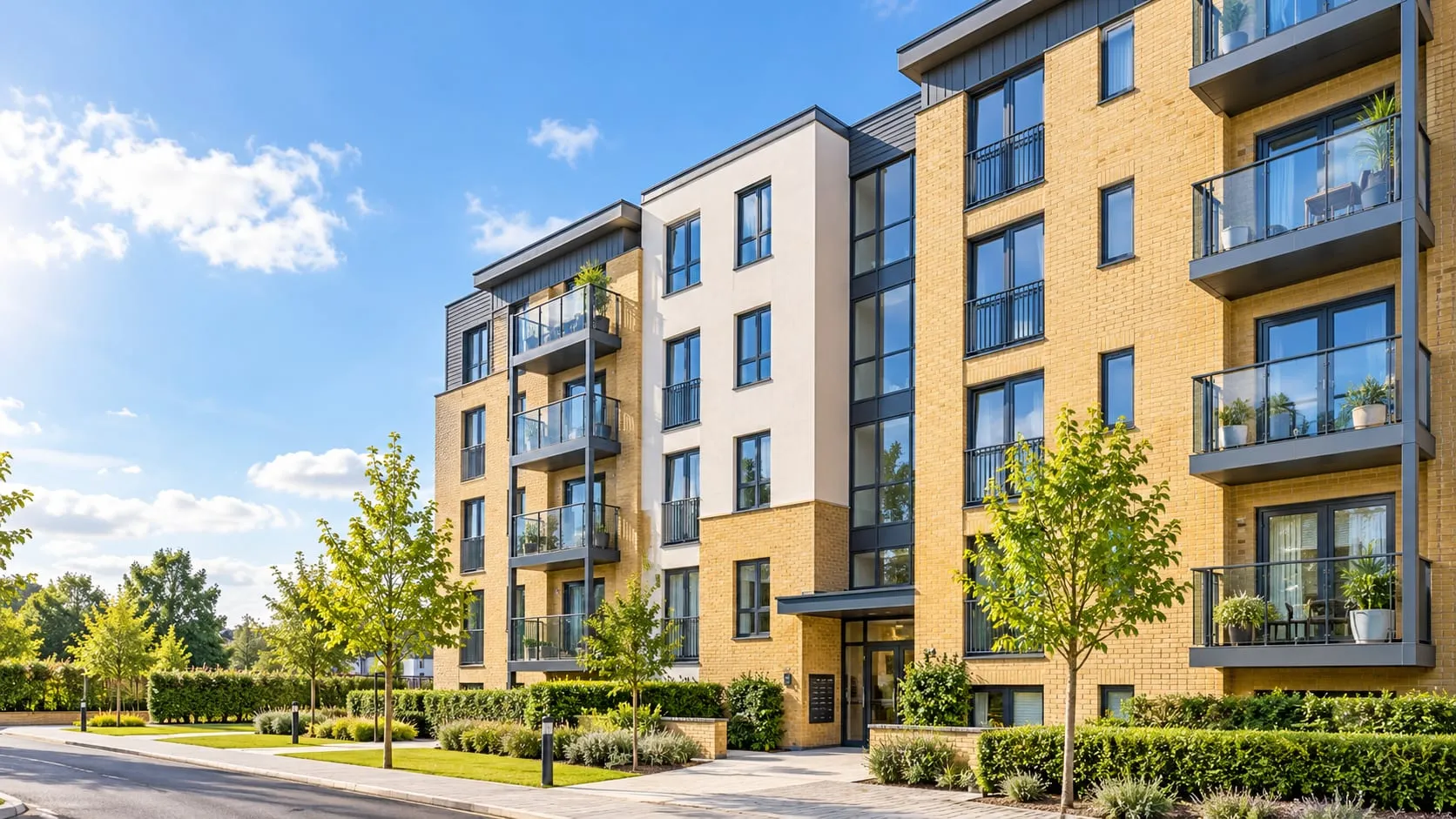
Cover for the whole building
Block of Flats Insurance
Cover for the whole structure and communal areas of a block, arranged by the freeholder or management company and recovered through the service charge.
- Freeholders, RTM and residents management companies
- Communal areas, liability and loss of rent included
- Compare quotes from 40+ providers
Partnered with Quotezone
What being partnered with Quotezone means LandlordQuote is a trading style of Simply Quote Comparison Ltd. We are partnered with Quotezone, a trading style of Seopa Ltd (FCA FRN: 313860). As an Introducer Appointed Representative of Seopa Ltd, we may be paid a commission if you request a quote through this website. We do not provide advice or make recommendations. Your choice of provider is entirely your own.Compare landlord insurance and deals from industry leading providers, including





















01
What Is Block of Flats Insurance?
Block of flats insurance covers the whole building, including the communal areas, under a single policy arranged by whoever holds the insuring obligation in the leases.
That is normally the freeholder, a right to manage company or a residents management company. Individual leaseholders do not insure the structure separately, and doing so simply duplicates cover.
It is one of the few forms of landlord insurance in the UK bought by a company or a group of leaseholders rather than by an individual landlord.
02
How Do You Compare Block of Flats Insurance Quotes?
Start from an accurate reinstatement figure for the whole building, then compare communal cover, liability limits and whether terrorism is included.
- 1
Get a reinstatement cost assessment
The sum insured has to cover the entire structure, communal areas, professional fees and demolition. On a block this is a surveyor’s job rather than a calculator’s.
- 2
Describe the construction honestly
Number of storeys, construction type, roof, and any external wall system or cladding. Taller blocks attract detailed questions and require documentation.
- 3
Check what the leases require
Leases frequently specify the perils to be insured and sometimes require terrorism cover or a named insured. A quote missing a required peril is not comparable.
- 4
Compare communal and liability cover
Communal contents, lifts, engineering inspection and property owners liability all vary. These are the sections that differ most between quotes.
03
What Does Block of Flats Insurance Cover?
It covers the structure of the whole building, the communal areas and their contents, property owners liability, and loss of rent or alternative accommodation after an insured event.
The whole structure
Every flat, the roof, the external walls and the common parts, insured as one. Individual leaseholders are covered for the structure of their own flat through this policy.
Communal areas and contents
Hallways, stairwells, lifts, bin stores, car parks and gardens. Carpets, lighting, door entry systems and communal furniture can usually be added as contents.
Property owners liability
Claims by residents, visitors and contractors arising from the building. Shared staircases and lifts raise the exposure well above a single dwelling.
Alternative accommodation and loss of rent
Where flats become uninhabitable, policies typically fund rehousing for resident leaseholders and cover lost rent for those letting out. Check which applies to whom.
Compare in one place
See what cover is available for your block.
One set of questions, quotes back from UK providers.
04
Who Arranges and Pays for the Cover?
The party with the insuring obligation under the leases arranges it, and the cost is recovered from leaseholders through the service charge.
Freeholders, RTM and RMC
A freeholder may arrange it directly, or the obligation may sit with a right to manage company or a residents management company. The lease decides, and it is worth reading rather than assuming.
How the cost is apportioned
Service charge shares are set out in each lease, often by floor area or by a fixed percentage. Insurance is usually one of the larger single items on the annual account.
Leaseholders' rights to information
Leaseholders can request a summary of the insurance and inspect the supporting documents. GOV.UK explains leaseholder rights, and the statutory route sits in the Landlord and Tenant Act 1985.
Reasonableness matters
Service charge costs must be reasonable, and leaseholders can challenge them at the First-tier Tribunal. Testing the market at renewal is the simplest way to demonstrate reasonableness.
05
What Do Leaseholders Still Need?
Contents cover, cover for their own improvements, and, if they let the flat out, landlord liability and rent protection.
Contents
The block policy does not cover a leaseholder’s furniture, electronics or belongings. Every leaseholder needs their own contents policy.
Improvements and fixtures
Kitchens, bathrooms and flooring fitted by a leaseholder may fall outside the block policy depending on the lease. Reading the demise carefully avoids an uninsured gap.
Landlord cover for let flats
A leaseholder letting their flat needs liability cover, loss of rent and contents for anything they supply. The block policy handles the structure only.
Cover while a flat is let out
A leaseholder who lets their flat should tell both the managing agent and their own insurer. Subletting can breach the lease, and an undeclared letting complicates any claim on the block policy.
Excess contributions
Where a claim affects one flat, the policy excess is often recharged to that leaseholder through the service charge. Knowing the excess before a leak matters.
06
What Is Not Covered by Block of Flats Insurance?
Leaseholders' contents, wear and tear, deferred communal maintenance and, unless added, terrorism and engineering breakdown.
-
Contents belonging to residents
Anything inside a flat that belongs to the occupier. This is the most common misunderstanding in blocks.
-
Wear and tear on communal areas
Worn carpets, tired decoration and ageing lighting are service charge items, not claims. Sinking funds exist for exactly this.
-
Terrorism, unless added
Terrorism is normally a separately priced extension. Many leases and lenders require it, so check rather than declining by default.
-
Damage inside individual flats caused by the leaseholder
Accidental damage to a leaseholder’s own kitchen or bathroom is usually theirs to resolve. The block policy responds to insured perils affecting the structure, not to everyday mishaps inside a demise.
-
Known building safety defects
Cladding and fire safety defects already identified are not insurable losses. The Building Safety Act 2022 changed the duties around higher-risk buildings, and insurers now underwrite external wall systems closely.
07
How Does a Block Insurance Claim Work?
The managing party notifies the insurer, a loss adjuster assesses, and the settlement covers reinstatement with the excess usually recharged through the service charge.
- Step 1 The managing party notifies the insurer
- Step 2 A loss adjuster assesses the damage
- Step 3 Settlement covers reinstatement
A worked example
An escape of water from a third-floor flat damages two flats below.
- Repairs across three flats
- £24,000
- Policy excess
- £1,000
- The insurer settles
- £23,000
Depending on the lease and the managing agent’s policy, the excess may be recharged to the leaseholder whose flat caused the leak, or spread across the service charge.
Communication is the hard part
Several leaseholders, one policy and one managing agent makes for slow claims. Agreeing early who reports, who instructs contractors and who handles access saves weeks.
Keep the documentation central
The reinstatement assessment, lease copies, engineering inspection reports and any building safety documents. Blocks fail claims on missing paperwork more often than on cover.
08
How Much Does Block of Flats Insurance Cost?
Price follows the rebuild cost, the height and construction of the block, its claims history and the communal facilities.
What moves the price
- 1 Reinstatement cost The largest single driver
- 2 Number of storeys Taller blocks cost more and narrow the market
- 3 External wall system Cladding raises it sharply and requires documentation
- 4 Claims history Escape of water claims are the common driver
- 5 Communal facilities Lifts, car parks and gardens add exposure
- 6 Commercial units A shop on the ground floor changes the rating
- 7 Terrorism cover A priced extension where required
Mixed-use blocks
A block with commercial units at ground level is rated on both uses. The trade in the commercial unit can affect the whole building’s premium.
09
How Can You Reduce the Cost?
Control escape of water, keep the reinstatement figure current, maintain communal areas and test the market at every renewal.
Tackle escape of water
Water damage is the most frequent and most expensive claim in blocks. Replacing ageing pipework, fitting isolation valves and dealing with leaks quickly all reduce claims and premiums.
Keep the reinstatement assessment current
An out-of-date figure risks a proportionate reduction across every flat. Reassessing every three to five years is normal practice.
Review the claims pattern honestly
If the same flat or the same pipe run keeps producing claims, fixing the cause is cheaper than absorbing the renewal increase. Insurers will discuss terms once remedial work is documented.
Maintain the communal areas
Lighting, handrails, door entry systems and external repairs prevent liability claims. A documented maintenance schedule also helps at renewal.
Build a sinking fund for the predictable costs
Roofs, lifts and communal decoration all reach the end of their life eventually. A funded reserve keeps those out of the insurance conversation, where they do not belong.
Test the market and show the evidence
Comparing at renewal both reduces the cost and demonstrates to leaseholders that the charge is reasonable. On a block, that second point matters as much as the first.
Questions
Frequently asked questions
Who is responsible for insuring a block of flats?
Almost always the freeholder, or the right to manage or residents management company that holds the obligation under the leases. Individual leaseholders do not insure the structure separately.
How is the premium paid for?
The cost is recovered from leaseholders through the service charge, in the proportions set out in their leases. Leaseholders have statutory rights to see the policy and question the cost.
Do leaseholders need their own insurance?
They need contents cover, and often improvements they have made to their own flat. Where a leaseholder lets their flat out, they also need landlord liability and loss of rent cover.
What sum insured should the block have?
The full rebuild cost of the whole building including communal areas, professional fees, demolition and site clearance. A professional reinstatement cost assessment every few years is the usual approach.
Is terrorism cover needed?
It is not automatic on most policies. Many leases and lenders require it, particularly in city centres, so check the lease before deciding.
Does the policy cover communal areas?
Yes. Hallways, stairwells, lifts, bin stores, car parks and communal gardens are all part of the insured structure, and contents in those areas can usually be added.
What about engineering inspection for lifts?
Lifts and other plant need statutory inspection, and the duty usually sits with whoever controls the equipment. Many block policies bundle the inspection service.
Does the Building Safety Act affect insurance?
It changed duties around higher-risk buildings and cladding remediation, and insurers now ask detailed questions about construction and external wall systems. Expect to provide documentation for taller blocks.
Can leaseholders challenge the insurance cost?
Yes. Leaseholders can request a summary of the insurance and inspect supporting documents, and service charge costs must be reasonable. Disputes can go to the First-tier Tribunal.
Does it cover empty flats in the block?
Blocks expect some turnover, but a flat standing empty long-term should be declared. Extended vacancy across several units can affect the cover.
Does it cost anything to compare quotes here?
No. Comparing is free and there is no obligation to buy. We may be paid a fee when a policy is taken out, which does not change the price you are quoted.
Ready to compare quotes?
Cover for the whole structure and communal areas of a block, arranged by the freeholder or management company and recovered through the service charge.
Compare landlord insurance quotes from UK providers.