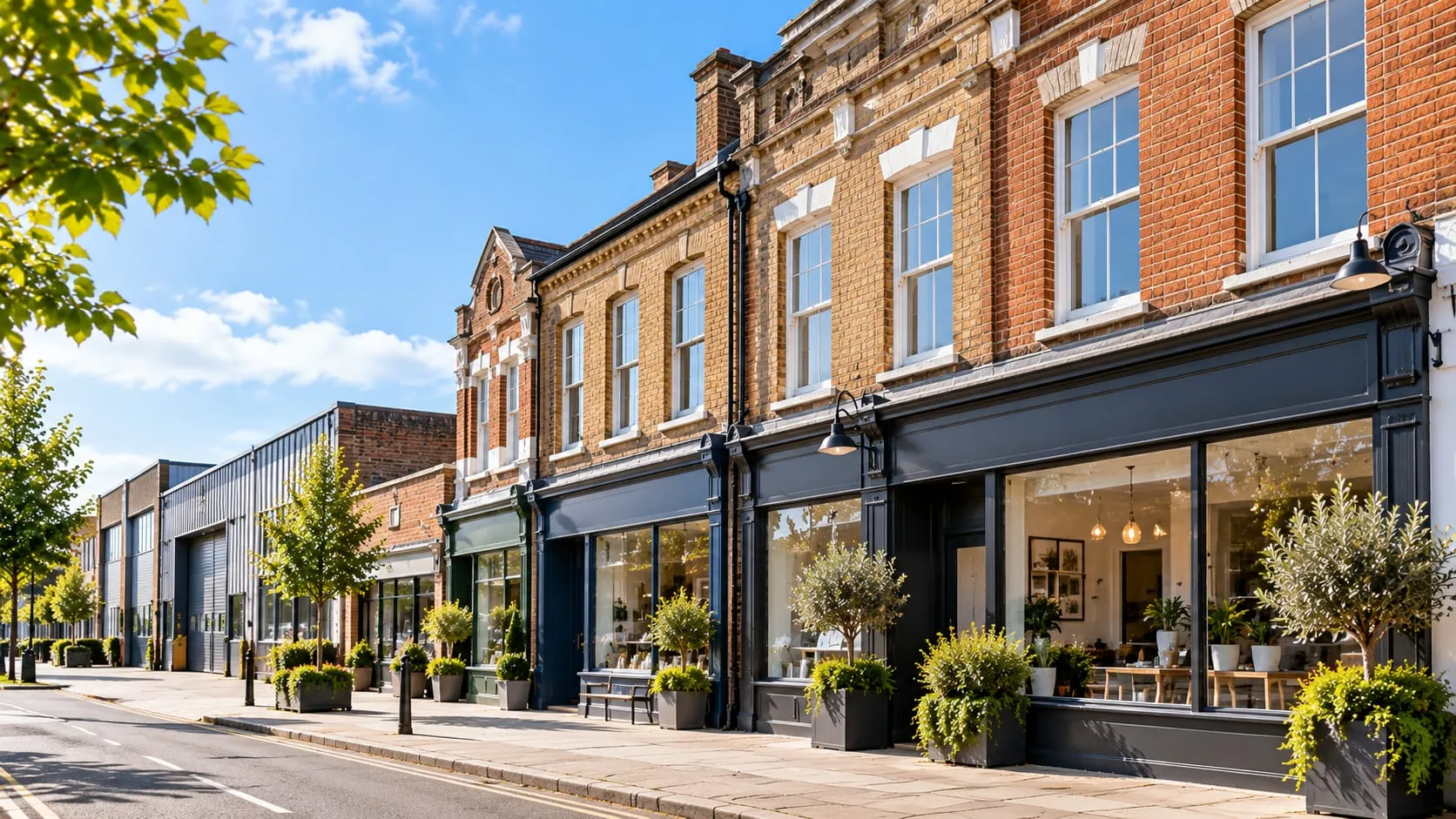
Cover for commercial property you let
Commercial Landlord Insurance
Cover for shops, offices, industrial units and mixed-use buildings let to business tenants, including the periods when they stand empty.
- Shops, offices, warehouses and mixed-use buildings
- Property owners liability and loss of rent included or optional
- Compare quotes from 40+ providers
Partnered with Quotezone
What being partnered with Quotezone means LandlordQuote is a trading style of Simply Quote Comparison Ltd. We are partnered with Quotezone, a trading style of Seopa Ltd (FCA FRN: 313860). As an Introducer Appointed Representative of Seopa Ltd, we may be paid a commission if you request a quote through this website. We do not provide advice or make recommendations. Your choice of provider is entirely your own.Compare landlord insurance and deals from industry leading providers, including





















01
What Is Commercial Landlord Insurance?
Commercial landlord insurance covers a building you own and let to a business, combining buildings cover for the structure with property owners liability for claims brought against you as the owner.
It is sometimes sold as commercial property owners insurance, and the two names describe the same product. The tenant insures their own stock, equipment and trading risks separately.
It is a smaller market than residential landlord insurance across the UK, and the spread between quotes on the same building is often wide.
02
How Do You Compare Commercial Landlord Insurance Quotes?
Describe the building, the trade carried on inside it and the lease terms, then compare cover and indemnity periods rather than premium alone.
- 1
Describe the building
Insurers want the construction, the age, the floor area and the rebuild cost. Flat roofs, timber frames and older electrics all change the rating.
- 2
Say what the tenant does
The trade matters more than almost anything else. A solicitor’s office and a takeaway in identical buildings will be priced very differently.
- 3
Set the loss of rent indemnity period
Choose how many months of rent you want protected. Think about how long a full rebuild would take, including planning and tendering, not just the building work.
- 4
Check the lease obligations against the quote
Your lease may require specific perils, terrorism cover or a named insured. A quote that misses one of them is not comparable on price.
03
What Does Commercial Landlord Insurance Cover?
A standard policy covers the building and its fixtures, your liability as owner, and the rent you would lose if the property became unusable.
Buildings and landlord fixtures
The structure, the roof, and anything you own inside such as shop fronts, air conditioning and fitted kitchens in an office. Insure for the rebuild cost including demolition, site clearance and professional fees. Rebuild costs on commercial buildings are easy to underestimate. Sprinkler systems, lifts and plant all add to the figure.
Property owners liability
This responds when a customer, visitor, contractor or passer-by claims injury or damage caused by the building. Footfall matters here, which is why a retail unit is treated differently from a warehouse.
Loss of rent
If the building cannot be occupied after an insured event, this replaces the rent for the indemnity period you chose. Under most leases the tenant stops paying rent once the building is unusable, so this is what protects your income.
Compare in one place
See what cover is available for your building.
One set of questions, quotes back from UK providers.
04
What Can You Add to a Commercial Property Policy?
Terrorism, engineering inspection, glass and legal expenses are the extensions commercial landlords are most often asked to consider.
The usual extensions
Each is priced separately, and some are required by leases or lenders rather than chosen.
| Extension | What it covers | Often required when |
|---|---|---|
| Terrorism | Damage from an act of terrorism | The lease or lender specifies it |
| Engineering inspection | Statutory inspection of lifts and plant | The building has a lift or pressure system |
| Glass | Shop fronts and large glazed areas | The property is retail |
| Legal expenses | Lease disputes and recovery of rent | You have several tenants |
| Loss of licence | Income lost if a licence is withdrawn | The tenant is a pub or restaurant |
Terrorism cover is separate
On commercial property, terrorism is normally a priced extension rather than part of the standard wording. Check the lease before declining it, because the obligation to insure may sit with you.
Engineering inspection is a legal duty
Lifts, boilers and pressure systems need statutory inspection, and that duty usually falls on whoever controls the equipment. Many insurers bundle the inspection service with the policy.
05
What Is Not Covered by Commercial Landlord Insurance?
The tenant’s own property, wear and tear, undeclared empty periods and damage arising from the trade itself sit outside a standard policy.
-
Anything belonging to the tenant
Stock, tools, fit-out paid for by the tenant and their business equipment are theirs to insure. Disputes usually come down to who paid for the fit-out, so record it at the start of the lease.
-
Undeclared vacancy
Cover falls away or narrows sharply once a unit has been empty longer than the policy allows. Empty commercial buildings attract vandalism, metal theft and unauthorised occupation, which is why insurers want to know immediately.
-
Gradual deterioration
A roof that has been failing for years is a repair, not a claim. Insurers expect a maintenance programme and will ask for evidence of it after a large loss.
-
Risks created by the trade
Some trades need conditions met before cover applies, such as fixed extraction and deep fat frying controls in a takeaway. If the tenant changes their trade, tell the insurer.
06
How Does a Commercial Property Claim Work?
You notify the insurer, a loss adjuster assesses larger losses, and settlement covers reinstatement plus the agreed rent for as long as the building is unusable.
A worked example
A fire in a retail unit makes the building unusable.
The rebuild is assessed at £420,000 and the annual rent is £28,000, with a 24 month indemnity period and a £1,000 excess. The insurer appoints a loss adjuster and agrees a reinstatement schedule. If the rebuild takes 16 months, the loss of rent element pays the rent for those 16 months, within the 24 month limit you selected.
Why the indemnity period matters
A 12 month indemnity period sounds generous until you add planning, listed building consent and a tender process to the build time. Commercial landlords who under-set this figure end up funding the gap themselves.
What the insurer will ask for
The lease, the schedule of condition and any maintenance records. Having them to hand shortens the process considerably.
07
How Much Does Commercial Landlord Insurance Cost?
The premium is driven by what the tenant does, what the building is made of and how long it has been occupied, so there is no meaningful average figure.
What moves the price
We do not publish average premiums, because the range across trades is far too wide for an average to mean anything.
- 1 Tenant trade The single largest factor, especially food and hot works
- 2 Construction Composite panels and flat roofs raise it
- 3 Rebuild cost and floor area Higher figures, higher premium
- 4 Occupancy Empty units cost more and restrict cover
- 5 Flood and subsidence risk Can limit which insurers will quote
- 6 Indemnity period A longer loss of rent period raises it
- 7 Security and fire protection Alarms and sprinklers reduce it
Business rates on empty units
Insurance is not the only cost of a vacant unit. Empty buildings relief covers the first three months, or six months for industrial property, and GOV.UK explains how business rates are worked out after that.
08
How Can You Save Money on Commercial Landlord Insurance?
Keep the rebuild figure accurate, invest in protection, avoid long vacancies and review the policy against the lease each year.
Get the rebuild figure independently assessed
Commercial rebuild costs move with construction inflation, and an old figure leaves you under-insured. A formal reinstatement cost assessment every few years is cheaper than a proportionate settlement reduction after a fire.
Improve protection
Sprinklers, monitored alarms and good perimeter security all reduce the premium. Insurers will often quote for the improvement before you commit to it.
Avoid drifting into a long vacancy
The premium rises and the cover narrows the longer a unit sits empty. Letting at a slightly lower rent can work out cheaper than an extended void.
Review the policy against the lease
If the lease has changed, or the tenant’s trade has, the policy should follow. Guidance published by the Association of British Insurers is a useful reference when comparing what different wordings include.
09
Who Insures Under a Full Repairing and Insuring Lease?
Under an FRI lease the landlord arranges the insurance and recovers the premium from the tenant as insurance rent, while the tenant carries the repairing obligations.
How insurance rent works
The landlord places the policy in their own name and recharges the cost to the tenant. The lease sets out what must be insured, which perils must be included, and how the cost is split where a building has several tenants. Tenants can usually ask to see the policy schedule. Disputes are rarely about the principle, and almost always about whether the landlord tested the market or simply renewed.
Why the policy stays in the landlord’s name
Keeping the policy with the landlord protects the asset and satisfies the lender. It also removes the risk of a tenant quietly letting cover lapse.
Where the repairing obligation stops
An FRI lease puts repairs on the tenant, but the insured perils are normally carved out of that obligation. Fire and flood damage is met by the policy rather than by the tenant, so the insuring covenant and the repairing covenant need to be read together.
Buildings with several tenants
Where a building is multi-let, insurance is placed once and recovered through the service charge. Apportionment is usually by floor area and should be stated in each lease. An uninsured tenant default clause matters here too. If a tenant fails to pay their share, the shortfall lands on you unless the lease says otherwise.
10
Which Commercial Properties Can You Insure?
Shops, offices, industrial units, warehouses, mixed-use buildings and blocks with commercial ground floors are all insurable, though the trade inside decides which insurers will quote.
Shops and retail units
Glass, footfall and stock all drive the rating. A ground-floor retail unit with flats above needs mixed-use cover rather than a straight commercial policy.
Offices and professional premises
Generally the lowest-rated commercial risk, because there is little in the way of hot work or hazardous processes. Lifts and air conditioning bring engineering inspection into play.
Industrial units and warehouses
Construction matters most here, particularly composite panel insulation. What is stored inside also affects the rating, even though the stock itself is the tenant’s to insure.
Mixed-use buildings
A building with commercial and residential parts is rated on both. If the residential element is a block of flats, the freeholder’s obligations come into it too.
Where security of tenure comes in
Business tenancies are often protected by the Landlord and Tenant Act 1954, which gives a tenant the right to renew unless the lease was contracted out. It shapes your letting strategy rather than your cover, but it is worth knowing before a lease ends.
Questions
Frequently asked questions
What is commercial landlord insurance?
It is property owners cover for a building you let to a business rather than to a household. The core is buildings cover plus property owners liability, with loss of rent and terrorism cover as common additions.
Who pays for the insurance, me or my tenant?
You arrange it, but under a full repairing and insuring lease the tenant normally reimburses the premium as insurance rent. The lease sets out what you must insure and what you may recharge.
Is commercial landlord insurance a legal requirement?
No statute requires it. Your lease and any lender almost always do, and letting a commercial building uninsured leaves you exposed to a rebuild cost you would have to fund yourself.
Does my tenant’s business insurance cover the building?
No. A tenant insures their own stock, equipment and business liability. The structure is the landlord’s responsibility unless the lease says otherwise.
What happens when a commercial unit is empty?
Tell the insurer as soon as the tenant leaves. Cover is normally restricted after a set number of consecutive days, and empty commercial buildings carry a higher risk of water damage, vandalism and unauthorised occupation.
Do I still pay business rates on an empty unit?
Usually yes, after an initial relief period. Empty buildings relief runs for three months from the date the property becomes empty, extended to six months for industrial property.
Is terrorism cover included?
Not by default. On commercial property it is normally offered as a separately priced extension, and some leases or lenders require it.
Can I insure a shop with flats above it?
Yes, but it needs mixed-use cover rather than a straight commercial or residential policy. Tell the insurer what each part of the building is used for.
What is loss of rent cover on a commercial policy?
It replaces the rent you lose while the building cannot be occupied after an insured event such as a fire. You choose an indemnity period, commonly 12, 24 or 36 months, which should reflect how long a rebuild would realistically take.
Does the tenant get security of tenure?
Business tenancies are often protected under the Landlord and Tenant Act 1954, which gives the tenant a right to renew unless the lease was contracted out. It affects your letting plans rather than your insurance directly.
Does it cost anything to compare quotes here?
No. Comparing is free and there is no obligation to buy. We may be paid a fee when a policy is taken out, which does not change the price you are quoted.
Ready to compare quotes?
Cover for shops, offices, industrial units and mixed-use buildings let to business tenants, including the periods when they stand empty.
Compare landlord insurance quotes from UK providers.